
Why Car Part Identification Through Direct Part Marking Matters in Tanzania and Across Africa
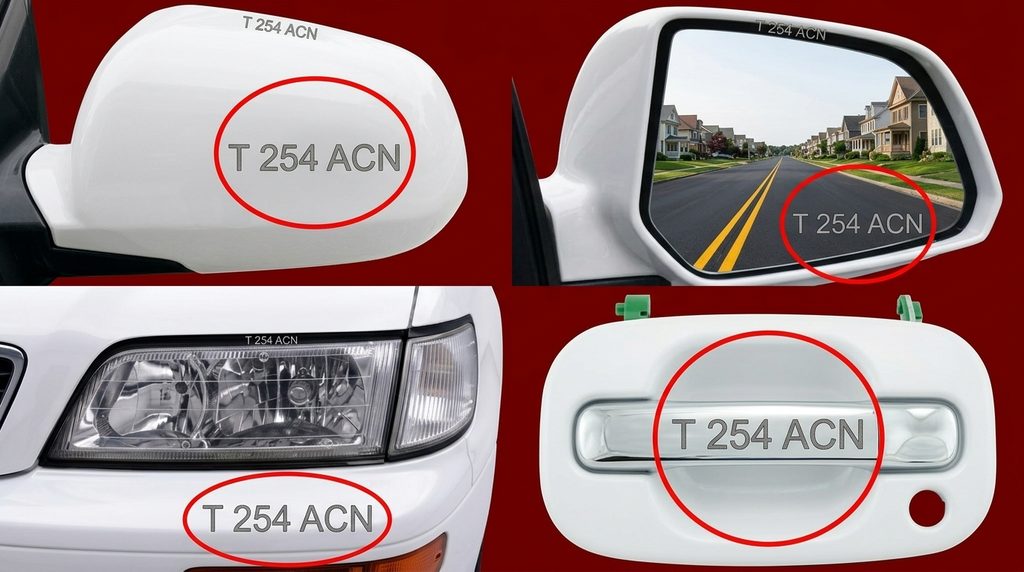
Imagine parking your vehicle outside a busy restaurant in Dar es Salaam, attending a Sunday church service in Arusha, dropping your children off at school in Mwanza, or parking a corporate utility vehicle overnight in a logistics yard in Dodoma. When you return, everything looks intact. Your doors are locked, your windows are up, and the engine starts smoothly. Yet, under the hood or along the chassis, a silent transaction has taken place: a high-value electronic control unit (ECU), a catalytic converter, side mirrors, or a pristine car battery has been expertly swapped or stripped in minutes.
For vehicle owners, fleet operators, NGOs, government institutions, and everyday motorists across Tanzania and East Africa, automotive security is often viewed only through the lens of physical locks, alarms, and tracking devices. But what happens when the threat is internal, invisible, or operating right inside the unregulated spare parts supply chain? Welcome to the definitive guide on Direct Part Marking (DPM)a transformative technology brought to life by OfaNex that is redefining asset protection, garage accountability, and peace of mind across the continent.
Think about the last time you left your car at a garage. You handed over the keys, explained the problem, and went home. A day or two later you collected the car, paid the bill and drove away. But did you ever stop to ask a simple question: are the parts on my car today the same parts that were on it yesterday?
For most owners in Tanzania, the honest answer is that they cannot be sure. A battery can be swapped for an older one. A good alternator can be replaced with a tired one. A headlamp, a side mirror, a set of wheels, even a gearbox can change without the owner noticing. And when parts are stolen from a parked car, nothing links them to the vehicle they came from, so they disappear into the spare parts market within hours
This article explains a practical solution that is already used in many industries around the world: Direct Part Marking. It shows why car part identification matters to every kind of vehicle owner, from a person with one family car to a government fleet with hundreds of vehicles.
Quick answer: what is Direct Part Marking?
Direct Part Marking (DPM) is the process of permanently marking an identification code straight onto a part. For vehicles, this usually means engraving or etching the car's Vehicle Identification Number (VIN) on parts that are already fitted to the car. The mark can be a readable number, a barcode or a QR code, and it can be linked to a digital record of the vehicle. Because the mark is part of the metal, glass or hard plastic itself, it stays with the part for life.
The problem most vehicle owners never see
A car is made of hundreds of parts, and almost none of them carry any proof of which vehicle they belong to. The VIN is stamped on the chassis and printed on the registration card, but the battery, the radio, the headlamps, the wheels, the catalytic converter and the control units are anonymous. This creates two quiet problems.
- Parts can be removed without leaving a trace. If a part is stolen, the owner cannot prove it was theirs, and a buyer cannot tell where it came from.
- Parts can be replaced without the owner knowing. If a part is swapped during repair or servicing, there is no easy way to check what was removed and what was fitted.
Direct Part Marking answers both problems at once. It gives each important part an identity, and that identity belongs to your vehicle.
The Hidden Reality: More Than Just Street Theft
When people talk about car part theft, they usually picture brazen thieves dismantling vehicles parked in dark alleys. While street-level stripping is a genuine crisis, vehicle owners face an equally insidious threat that rarely makes the headlines: unauthorized part swapping and component tampering during routine garage servicing.
Picture this scenario: You hand your car over to a local mechanic for a routine brake pad replacement or suspension check. Your car stays at the garage for two days. When you pick it up, it drives fine. But six months later, when you experience engine trouble or sell the car, you discover that an original, high-grade alternator, fuel injector, or transmission sensor was swapped out for a worn-out, counterfeit, or inferior aftermarket clone while your car was out of sight.
Without a permanent identity stamped directly onto each component, proving that a part has been stolen or illicitly swapped is nearly impossible. Mechanics, insurance adjusters, and law enforcement agencies are left guessing. Direct Part Marking (DPM) bridges this accountability gap, ensuring that every vital component carries an immutable, verifiable fingerprint.
At the garage: how do you know what was changed on your car?
Most garages in Tanzania are run by honest, hardworking technicians, and many owners have a mechanic they trust. But even in the best garage, the owner is rarely present during the work. You cannot watch every bolt, and you may not know what a healthy part looks like. This is where doubt starts, and doubt is expensive.
Here are situations that vehicle owners and fleet managers describe all the time:
- You pay for a new part, but an older or cheaper part is fitted and the original is kept for resale.
- A part is removed for "testing" and a different one is returned in its place.
- A driver or workshop worker changes a part on a company vehicle and the manager only finds out when the vehicle breaks down.
- Parts are taken from a vehicle during long storage, repair delays or after an accident.
When your VIN is permanently marked on key parts, these problems become much easier to manage. Before you leave the car, the marked parts are recorded in your register. When you collect it, you or your fleet officer can scan the QR code or read the number on each part and confirm that it is still the original. If a marked part has been replaced, the new part will not carry your mark, and the difference is visible immediately. If a part has to be replaced for a good reason, the change is recorded with the date, the garage and the reason, so there is a clear service history.
This does not accuse any garage. In fact, it protects good garages. A workshop that welcomes part identification shows that it has nothing to hide, and it removes the argument that "someone else changed it". Clear records build trust between owner and mechanic.
Theft and resale: why stolen parts are so easy to sell
Car part theft is not only about the value of the part. It is about how easily the part can be sold. In most spare parts markets, a buyer does not ask where a battery, a wheel or a radio came from, because there is no way to check. That makes stolen parts almost as easy to sell as any other used part.
Direct Part Marking breaks that cycle. A part carrying a VIN is difficult to resell, because anyone who handles it knows it can be traced back to a vehicle and an owner. Removing the mark means grinding or damaging the part, which is itself a warning sign. When the risk of selling goes up, the reward of stealing goes down. And if a marked part is recovered, the police can match it to the vehicle and the registered owner.
No marking system makes theft impossible, and good locks, parking and tracking still matter. But marking adds a layer of protection that works even after a part has left the vehicle.
Who benefits from car part identification?
This is not a service only for big companies. Every group that owns or manages vehicles has a reason to care.
Individual car owners and families
If you are a private owner, your car is probably one of your largest assets, and it is how you take children to school, go to work and run your small business. A marked car gives you peace of mind, stronger proof of ownership for police reports and insurance, and a clear record of what has been changed. Marked parts also support a better resale price, because a buyer can see a documented history.
Private companies and fleet operators
Transport companies, logistics firms, car hire businesses, tour operators in Arusha and Zanzibar, mining and construction contractors, and delivery services all depend on vehicles to earn money. For them, every missing or swapped part means downtime, repair cost and lost income. A digital asset register that lists each vehicle and its marked parts helps managers control maintenance, spot unauthorised changes and hold drivers and workshops accountable.
Government ministries, agencies and public institutions
Public vehicles are paid for with public money. Ministries, regional offices, local authorities, hospitals, police units and public utilities need clear control and accountability for every asset. Part identification supports audit requirements, reduces losses and makes it easier to show that public assets are used for their intended purpose. It also fits well with wider asset management and digital government goals.
NGOs, donor-funded projects and development partners
Many NGOs and development projects operate vehicles in remote regions, where the cost of a lost or replaced part is high and repair options are limited. Donors expect strong asset control and clear reporting. Permanent marking and a digital register help organisations show that project vehicles and equipment are protected and properly managed from the first day to project close-out.
Schools and colleges
Schools run buses and vans for students, staff and sports teams. Parents trust the school to keep those vehicles safe and reliable. A simple part identification programme helps school administrators keep track of maintenance, avoid unnoticed part changes and protect the school's budget.
Churches, mosques and faith organisations
Faith organisations often manage vehicles that serve the community, such as buses for congregations, ambulances, outreach vehicles and utility trucks. These vehicles are often funded by member contributions, so stewardship matters. Marking and recording vehicle parts shows members that every shilling is protected, and it gives church and mosque committees a clear, transparent record.
Dealers, garages, insurers and leasing companies
Part identification also helps the businesses around vehicles. Dealers can offer a documented history. Insurers can verify theft claims more quickly. Leasing companies can confirm that the parts returned at the end of a lease are the ones that were issued. Honest garages can show clear proof of the work they carried out.
How Direct Part Marking works, step by step
- Vehicle check. The vehicle is inspected and its details, including the VIN, are recorded.
- Part selection. Key parts are chosen, such as wheels, battery, headlamps, mirrors, radio, catalytic converter, engine and gearbox.
- Permanent marking. The VIN or a unique code is applied by laser engraving or another durable method. Barcode, QR code or RFID tags can be added for fast scanning.
- Digital register. Each marked part is recorded in a digital asset register linked to the vehicle and its owner.
- Ongoing control. After any repair or service, the marked parts are checked against the register, and any approved replacement is recorded.
- Annual maintenance. Marks and tags are inspected each year, and the register is updated.
Why this matters now in Tanzania and across Africa
The number of vehicles on the roads of Dar es Salaam, Arusha, Mwanza, Dodoma, Mbeya and Zanzibar is growing. The port of Dar es Salaam connects Tanzania to Kenya, Uganda, Rwanda, Burundi, Zambia and the Democratic Republic of the Congo, and goods and vehicles move across these borders every day. As the vehicle population grows, so does the second-hand parts trade, and so do the chances of theft, disputes and lost records.
At the same time, businesses, government bodies and donors are asking for better asset control, better records and better transparency. Part identification fits all of these goals. It is practical, affordable compared with the cost of one stolen engine or one repeated dispute, and it can be done on the vehicles you already own.
Frequently asked questions
What is Direct Part Marking on a car?
It is the permanent marking of a code, usually the VIN, directly onto car parts so each part can be linked to the vehicle it belongs to.
Does marking damage my car parts?
No. Laser engraving makes a very shallow, precise mark that does not affect how the part works. The marking process is chosen to suit the material of each part.
Can the mark be removed?
A permanent mark is very hard to remove without visibly damaging the part. Any attempt to grind it off becomes a clear sign that the part is suspect.
How can I tell if a garage replaced a part on my car?
If your parts are marked and recorded, you can check the mark or scan the QR code after the repair. A missing or different mark shows that the part has changed, and your register shows whether the change was approved.
Is this service only for fleets and companies?
No. Individual owners, families, schools, churches, NGOs and government offices can all use it. The number of parts marked can be matched to your needs and budget.
Where can I get car part marking in Tanzania?
Car Identity, a service of OfaNex, provides laser engraving, barcode and QR code tagging, RFID tagging and digital asset register setup for clients in Dar es Salaam and across Tanzania and East Africa.
Does marking help with insurance claims?
It can. A marked part and a digital record give you stronger proof of ownership, which supports police reports and makes theft claims easier to explain and verify. Always confirm the exact requirements with your insurer.
Conclusion: a small mark that protects a large investment
Your vehicle is more than metal. It is your income, your family's transport, your organisation's service to the public. Yet most of its parts have no identity, which leaves owners exposed to theft on one side and unnoticed part changes on the other.
Direct Part Marking gives every important part a permanent link to the vehicle. It makes stolen parts hard to sell, makes changed parts easy to spot, and creates a clear record that all parties can trust. For individuals, companies, government bodies, NGOs, schools and churches across Tanzania and Africa, it is a practical step that pays for itself the first time it prevents a loss or settles a dispute.
Protect your vehicles with OfaNex
Car Identity, a service of OfaNex, provides physical asset identification across Tanzania and East Africa. Our services include laser engraving, barcode and QR code tagging, RFID tagging, digital asset register setup and annual maintenance contracts.
Ready to protect your car or your fleet? Contact OfaNex today for a free assessment and quotation.
Protecting your investment against theft, unauthorized garage swaps, and counterfeit parts with Direct Part Marking advanced technology and digital asset tracking across Tanzania and Africa.
